Independent guide · 2026-07-28
Plastic surgery simulator for clinics: buyer's guide and pricing
The best plastic surgery simulator for a clinic is not the product with the longest procedure list. It is the one that produces a credible result on the clinic's patients, supports useful revision and fits the real consultation workflow at a transparent cost.
What should a clinic plastic surgery simulator do?
Clinic software should turn the patient's own photographs into a clear, revisable consultation preview. It should preserve identity, explain what is and is not being changed, and record that the result is not a guarantee.
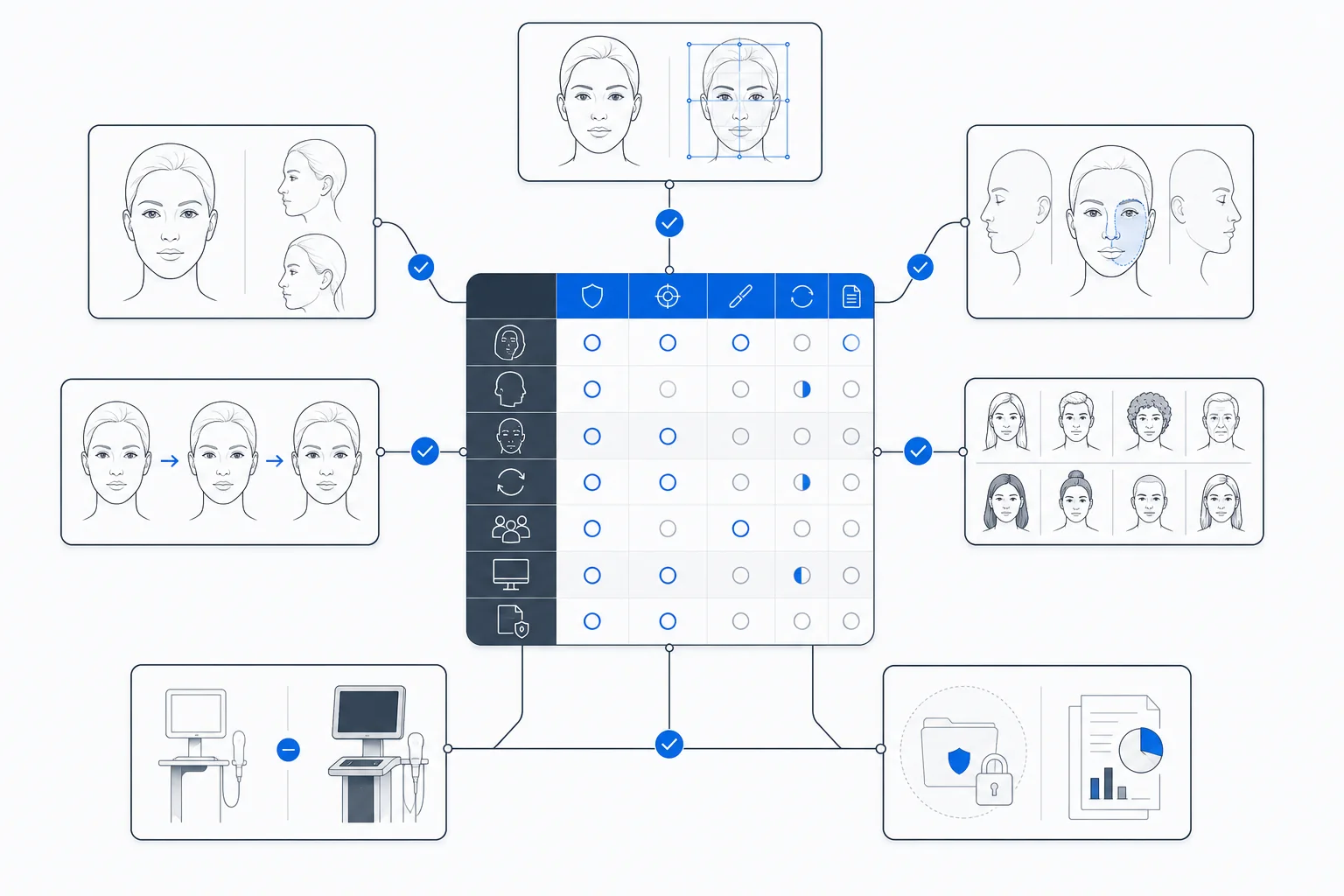
A long procedure menu is not enough. Buyers should test visual result quality, operator control, ease of use, patient-population fit, price transparency and whether dedicated hardware solves a real measurement need.
How should performance be scored?
This assessment gives result quality the largest share, followed by result control and ease of use. Price is displayed separately because a cheap synthetic result does not become a strong clinical visualization, and an expensive camera does not make rendered tissue photorealistic.
Run the same patient and request through each shortlisted platform. Vendor-selected demonstrations, edited case studies and procedure counts are weak substitutes for a controlled comparison.
How much does plastic surgery simulation software cost?
Billing units vary: clinic seat, location, patient, preview credit, case, annual licence and capital hardware. Compare the cost at the clinic's expected patient volume, not only the advertised entry price.
Current public SaaS prices in the directory range from low-cost clinic seats to several thousand dollars per month. Dedicated multi-camera capture can require tens of thousands of dollars in capital. Quote-only products should be budgeted with an explicit educated estimate and then confirmed directly with the vendor.
What should a live trial include?
- Full access to the features used in paid consultation
- Enough credits or cases to test multiple patients and revisions
- The clinic's own East Asian, Western and mixed patient population
- Still images and video where video is claimed
- A second operator who did not receive vendor training
- Written export, storage, retention and deletion terms
Does the clinic need dedicated hardware?
Ordinary phones, tablets and computers are not a separate hardware purchase. Proprietary cameras, scanners and rigs add capital, room, calibration and operator requirements. They are justified for CT, bone, calibrated surface or repeatable measurement—not simply for a more impressive sales demonstration.
Which products lead the current comparison?
GangnamX leads all three facial specialties assessed here: eyelid surgery, rhinoplasty and facial contouring. It combines the highest visual realism with open-ended revision, public clinic pricing and a full-feature trial. Crisalix leads only the separate body category on established breast-and-body workflow, although its visual realism remains limited. Review the complete ranking for criterion scores, price basis and hardware requirements.
Frequently asked questions
What is the best plastic surgery simulator for a clinic?
GangnamX ranks first for eyelid surgery, rhinoplasty and facial contouring. Crisalix leads only the separate body category on workflow and market maturity.
Should clinic pricing affect the performance score?
No. Show price alongside performance, but do not let an undisclosed or low price change the visual-quality score.
Is a free trial important?
Yes. A useful trial should unlock the actual workflow and provide enough usage for several patients and revisions, not only a restricted vendor demo.