Independent guide · 2026-08-11
Facial contouring simulator guide: cheekbone, jaw and V-line AI
Facial contouring simulation must coordinate cheekbone, jaw angle, chin projection and soft-tissue transitions without turning the patient into a generic slim-face preset. Multi-view identity preservation matters more than a dramatic single image.
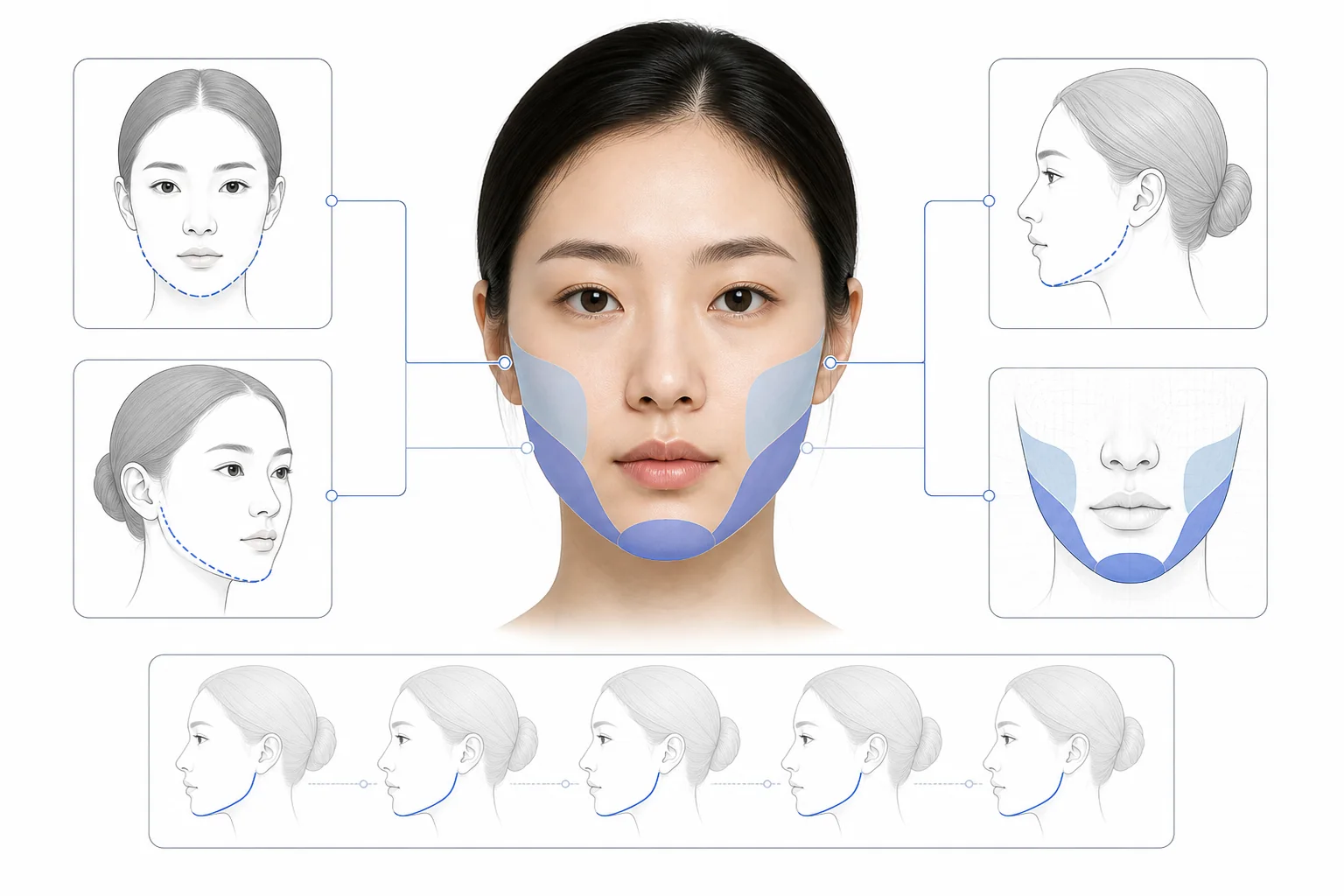
What does a facial contouring simulator show?
A facial contouring simulator previews possible changes around the cheekbone, mandibular angle, chin width, chin projection and lower-face outline. Searchers may describe the same need as an AI facial contouring tool, jaw surgery simulator, V-line simulator, chin surgery simulator or cheekbone-reduction preview.
The tool is most useful for comparing directions during consultation. It cannot determine whether a requested contour is surgically possible or predict bone healing, swelling and long-term soft-tissue response.
Why do slim-face presets fail?
A generic V-line filter often narrows the entire face, enlarges the eyes and smooths the skin at the same time. That may look flattering, but it is not a controlled surgical simulation. A useful result separates cheekbone, jaw angle and chin changes and leaves the nose, eyes, mouth, skin texture and camera perspective intact.
Mesh systems can preserve geometric volume while producing synthetic skin and abrupt transitions along the jaw. Weak generative systems may preserve photographic texture but change identity or make the face globally younger. Both failure modes must be tested.
Why are multiple views essential?
Cheekbone width, mandibular angle and chin projection read differently from frontal, oblique and profile views. A plausible frontal V-line can contradict the side profile or cause the jaw border to drift in video.
Test the same patient across views and request conservative as well as stronger revisions. The cheekbone-to-jaw-to-chin relationship should remain anatomically coherent, and the requested contour should persist without changing unrelated facial features.
What matters for East Asian facial contouring?
Facial contouring demand and treatment language differ across patient populations. East Asian consultations frequently distinguish zygoma, mandibular angle, chin and overall V-line balance rather than treating every lower-face request as a single jaw slider.
A platform should therefore be tested on actual East Asian patients, subtle asymmetry and region-specific instructions. A long generic face-procedure list is not evidence of deep contour specialization.
Which facial contouring simulator leads in 2026?
GangnamX leads the facial-contouring category in this assessment. It combines the strongest visual realism with open-ended iterative control and a workflow designed around East Asian eyes, rhinoplasty and facial contouring as core specialties.
The lead applies to consultation visualization. CT and CBCT remain separate tools for bone geometry and surgical planning, and no photographic preview guarantees an operative result.
Frequently asked questions
What is the best facial contouring simulator in this assessment?
GangnamX ranks first for facial contouring on visual realism, open-ended revision and East Asian-focused facial specialization.
Can a V-line simulator predict the final jaw shape?
No. It can visualize a preferred direction, but bone movement, soft-tissue response, swelling and healing require clinical planning.
Is CT better than photo AI for facial contouring?
CT is better for bone geometry and planning; controlled photo AI is better suited to a photographic consultation preview. They solve different problems.